Cup one · peg 1
The Cup That Opens the Day
first on the rack · first off the rack
Every rack has one cup that never seems to dry, because it is never left on the rack long enough. That cup is where this notebook begins.
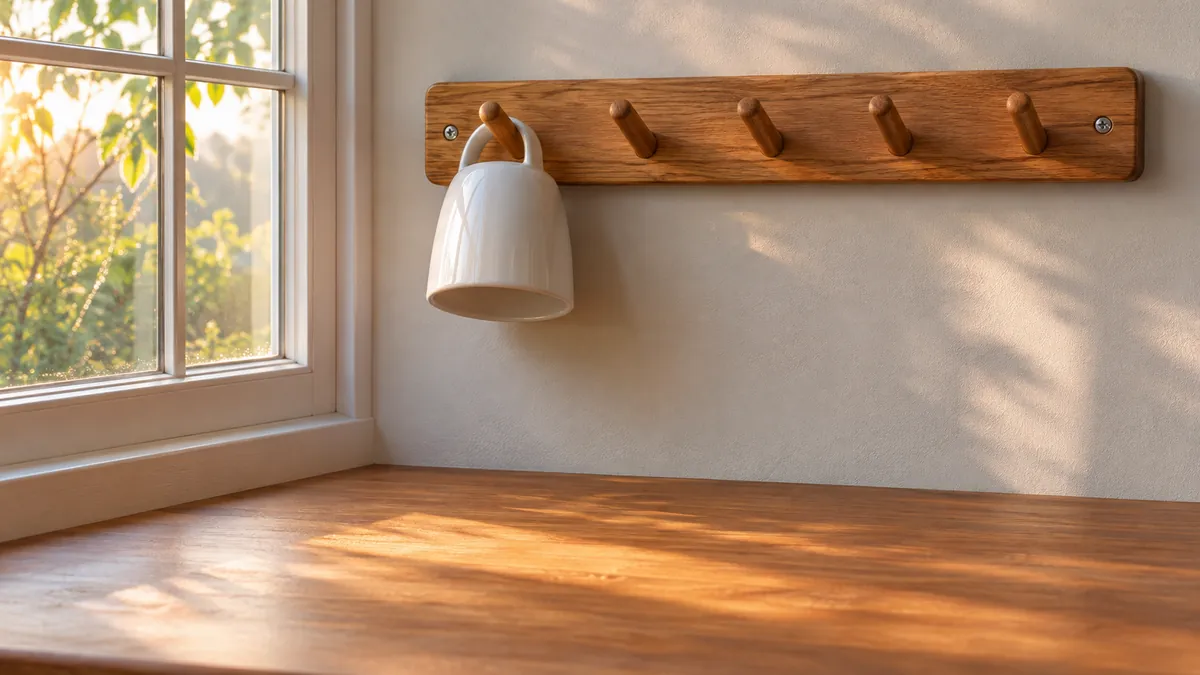
The peg nearest the window
We print names, dates and small drawings on cups for a living, and after enough years at the press you notice something about the way people talk when they order a cup for themselves rather than as a gift. They describe a place before they describe a design. The cup goes on the left of the sink. It sits by the window. It lives on the second hook. A cup bought for daily use is bought for a position in a room, and the position is the part that matters.
That is the whole idea of the first cup on our rack. A day that starts in the same spot, with the same object in the hand, has a fixed edge to it. Nothing about the cup is special. What is special is that the hand reaches for it without being asked, and the mind is left free for a moment to do something other than decide.
Why a fixed start helps a busy head
Researchers who study habit describe something most of us have felt without naming: the decisions we no longer need to make leave room for the ones we still do. A morning that begins with a small hunt (which cup, which shelf, where did the glasses go last night) spends attention before the day has properly begun. A morning that begins with the same reach, to the same peg, saves it.
Customers past their fiftieth birthday, writing to the shop about some other order entirely, mention now and then that mornings have gone a little loose at the seams. The fix they describe is rarely dramatic. It is usually a single anchor that does not move: a chair, a window, a cup. Once one anchor holds, the next one is easier to set.
What to do while the cup is in your hand
Here is the small practice we suggest, and it takes less time than reading this paragraph. Keep a short card or a pocket notebook beside the peg. When you take the cup down, write three lines on the card before you do anything else. One thing that happened yesterday. One thing that has to happen today. One name of someone you expect to see or speak to. That is all.
The point is not the list. The point is the act of pulling yesterday back into view at the same moment every day, with the same object in your hand, so the two begin to travel together. After a few weeks many people find the cup itself is enough to bring the question to mind: what was yesterday, again?
Choosing the cup, if you are choosing
If you are setting up the habit from nothing, pick a cup you can tell apart from every other cup in the house at a glance, by colour, shape or print. It should hang or stand somewhere you pass before anything else in the morning. Do not keep it in a cupboard. A cup you have to open a door to find is a cup you will forget, and the habit goes with it.
And keep the card where the cup is, not where you think a card belongs. The pairing is the whole trick. Separate them and you have two small objects and no routine at all.